
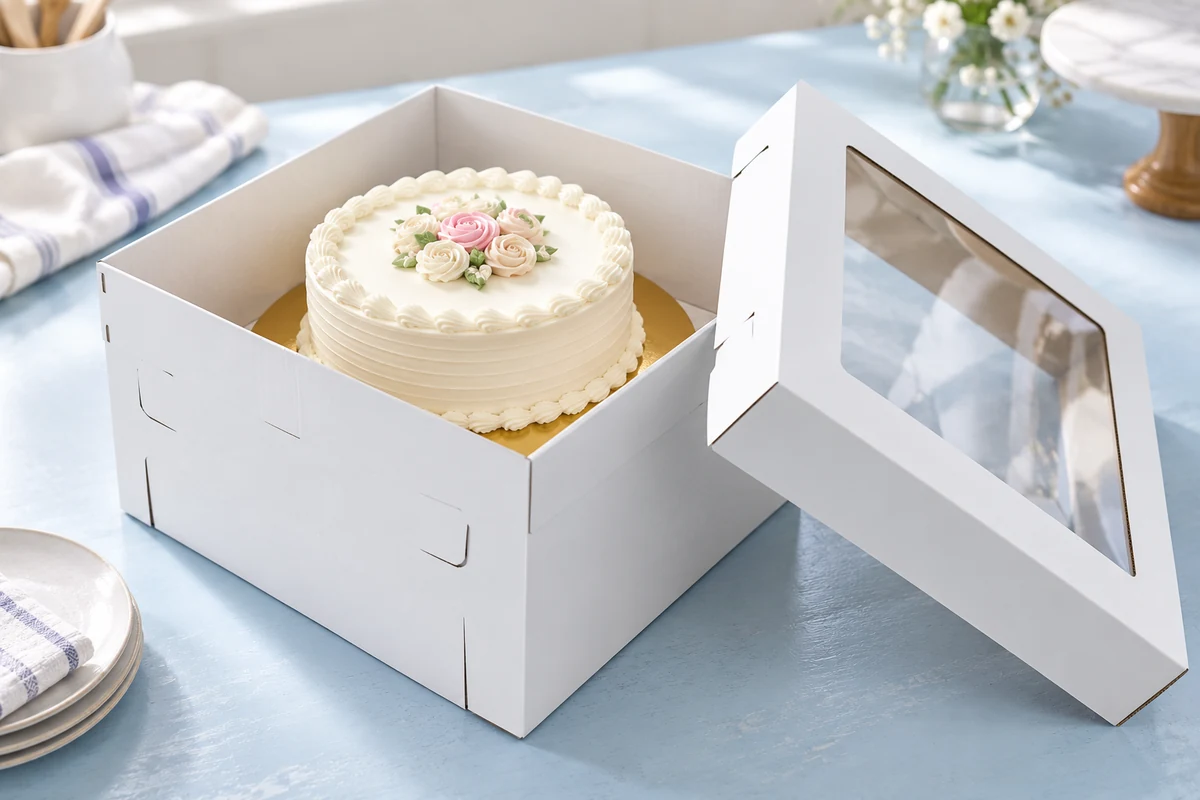
Cake boards and boxes need to work together. A box sized only around the cake can fail to accommodate the board, while a loose board can allow movement during handling.
Measure the finished setup
Start with the board’s widest dimensions, including any decorative covering or tabs. Then measure the finished cake’s maximum height with toppers and decorations in place. If a topper will travel separately, make that part of your packing instructions.
Tell the supplier whether your measurements refer to the cake, board, or box. Confirm usable internal dimensions before choosing a size.
Look beyond diameter
- Support: select a board suitable for the finished cake’s weight and handling requirements.
- Clearance: check that the board enters and exits without bending the box.
- Height: make sure the lid stays clear of icing and decorations.
- Movement: test whether the board slides during a representative trip.
Ask about the intended use and specifications of the proposed board and box. Do not assume a thicker-looking board or a taller box is suitable for every cake.
Test loading and customer handoff
Use a representative finished order to assess how staff place the cake inside and how the customer removes it. Check that the box closes without pressure and can be supported from underneath.
Write a short handoff note covering level placement and careful handling. Packaging supports presentation, but customers also need clear instructions for carrying the order.
Review W Packaging’s bakery packaging options. For the details to include in your inquiry, use our packaging quote checklist.
Match your boards and boxes
Ask W Packaging about your cake packaging setup. Include board dimensions, finished cake height, approximate weight, quantity, and a product photo.