
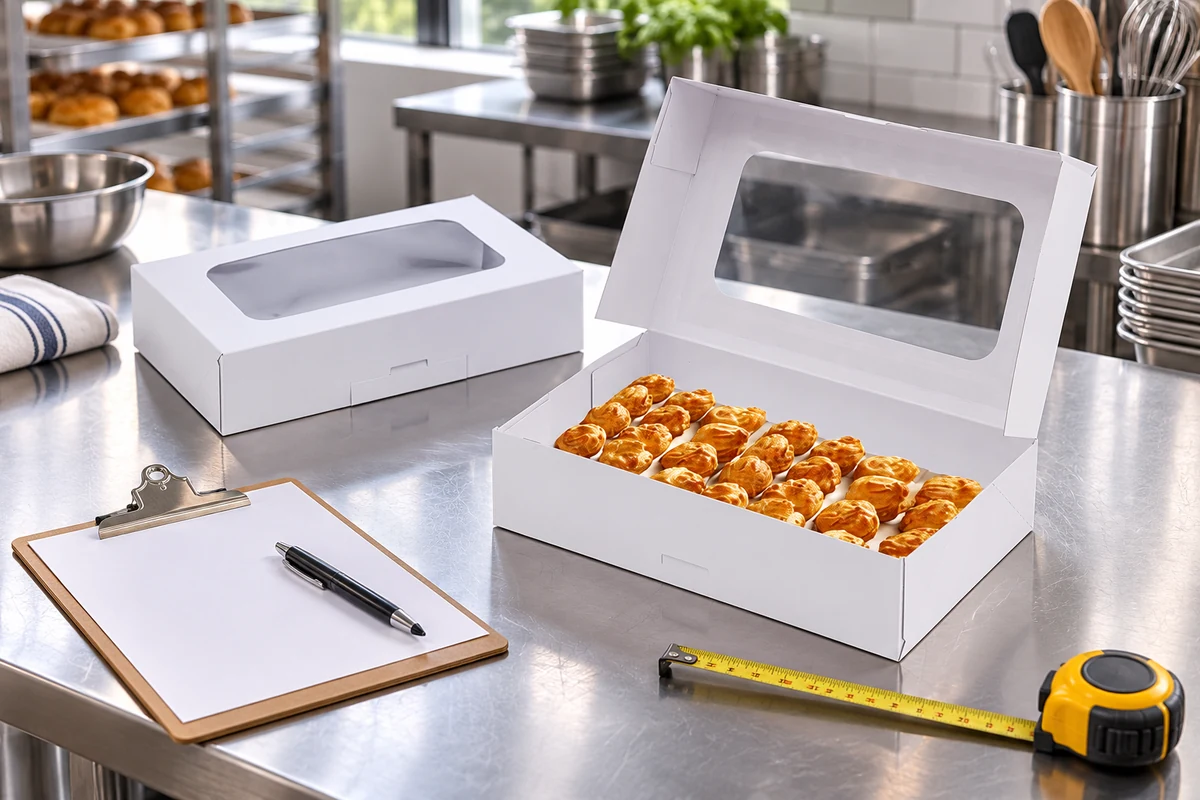
Catering boxes need to work with your menu, your staff, and the way orders leave the kitchen. A quick test with a fully packed sample can reveal problems that an empty box will never show.
Pack the order you actually sell
Choose a representative order with its normal containers, lids, utensils, napkins, and labels. Include heavy items and any components that are easy to crush. Measure the full arrangement and note the total weight.
Keep sauces in appropriate closed containers and separate items that could damage each other. Ask your supplier whether the proposed outer carrier is intended to hold packaged food or make direct food contact.
Run a kitchen-to-customer trial
- Assemble: time how long staff need to open and secure the box.
- Load: check that containers sit level and the closure works without pressure.
- Carry: use the intended handles or support points with the full load.
- Transport: recreate the typical trip and stacking arrangement.
- Unpack: inspect shifting, crushed corners, loose lids, and presentation.
Record the conditions and results. If the box bends, the handle feels strained, or containers move, change the setup and test again. Do not treat a successful light-load test as approval for a heavier order.
Make the result repeatable
Photograph the approved arrangement and write a short packing instruction for staff. Define which menu package uses which carrier. Confirm product suitability and available specifications with the supplier before ordering.
Explore W Packaging’s food and beverage carriers and custom print options to narrow the discussion.
Bring your catering setup to W Packaging
Ask about catering box options. Share a photo of the complete order, dimensions, loaded weight, and expected quantity so the team can discuss a suitable starting point.