
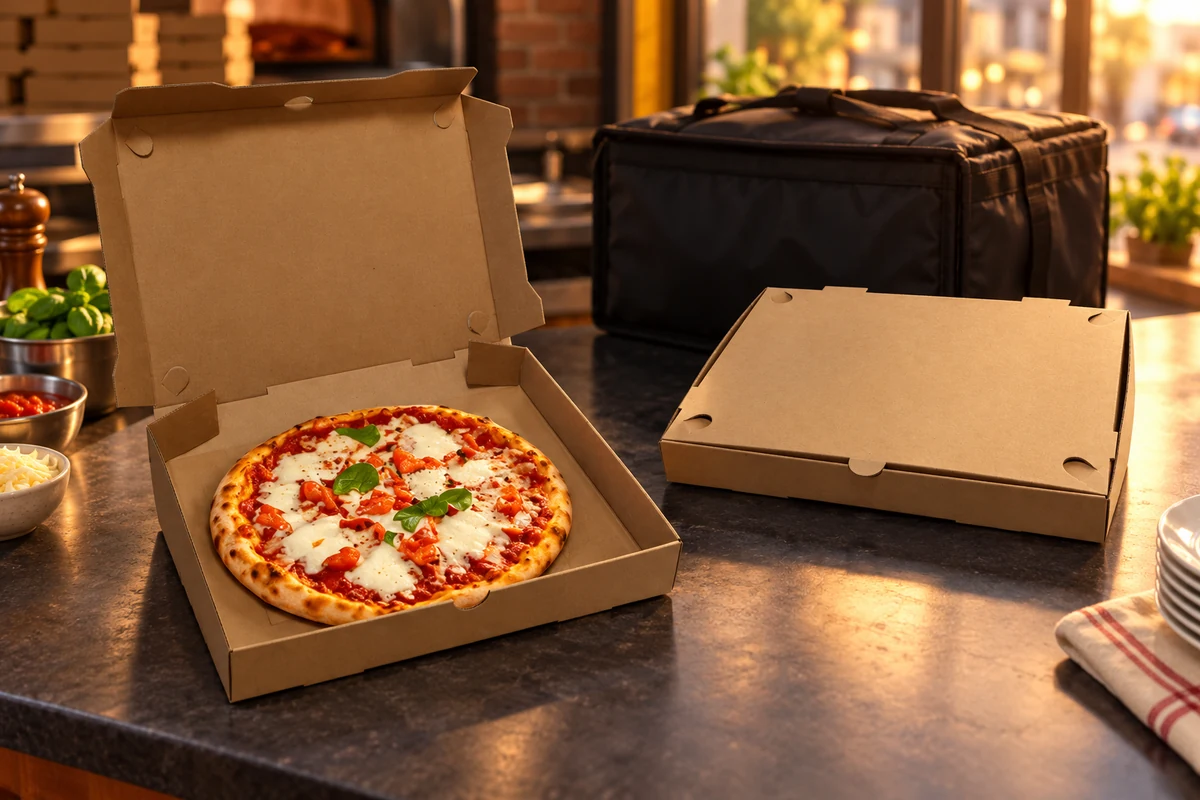
Pizza box fit affects how easily staff pack an order and how the pizza looks when the customer opens it. A nominal pizza diameter is only the starting point. Your crust, toppings, cutting method, and delivery routine also matter.
Measure the finished pizza
Measure several pizzas after baking, including the largest examples from a normal shift. Note the widest crust and tallest toppings. Include any liner, support, or accessory used in your actual packing process.
Ask whether the listed box dimensions describe the inside or outside. A product name alone does not tell you the usable space after the box is assembled.
Check four points under normal conditions
- Side clearance: the crust fits without being compressed or folded.
- Lid clearance: the closed top stays clear of toppings.
- Closure: the box secures without bulging or extra force.
- Stacking: the normal order stack stays stable without pressing down on the pizzas.
Evaluate arrival, not just dispatch
Pack a representative order and recreate a typical delivery trip using your usual bag and handling process. Open the boxes at the end and record crust contact, topping movement, moisture, and visible damage.
If the result disappoints, review the box structure and your packing and handling process together. Do not assume changing one dimension will resolve every problem. Ask the supplier about a sample or suitable alternative and repeat the trial.
Review W Packaging’s pizza packaging range. Once fit is settled, explore custom printing for branding that works with the selected box.
Find your next pizza box
Request pizza box options with your finished pizza measurements, current box details, quantity, and the problem you want to solve.