
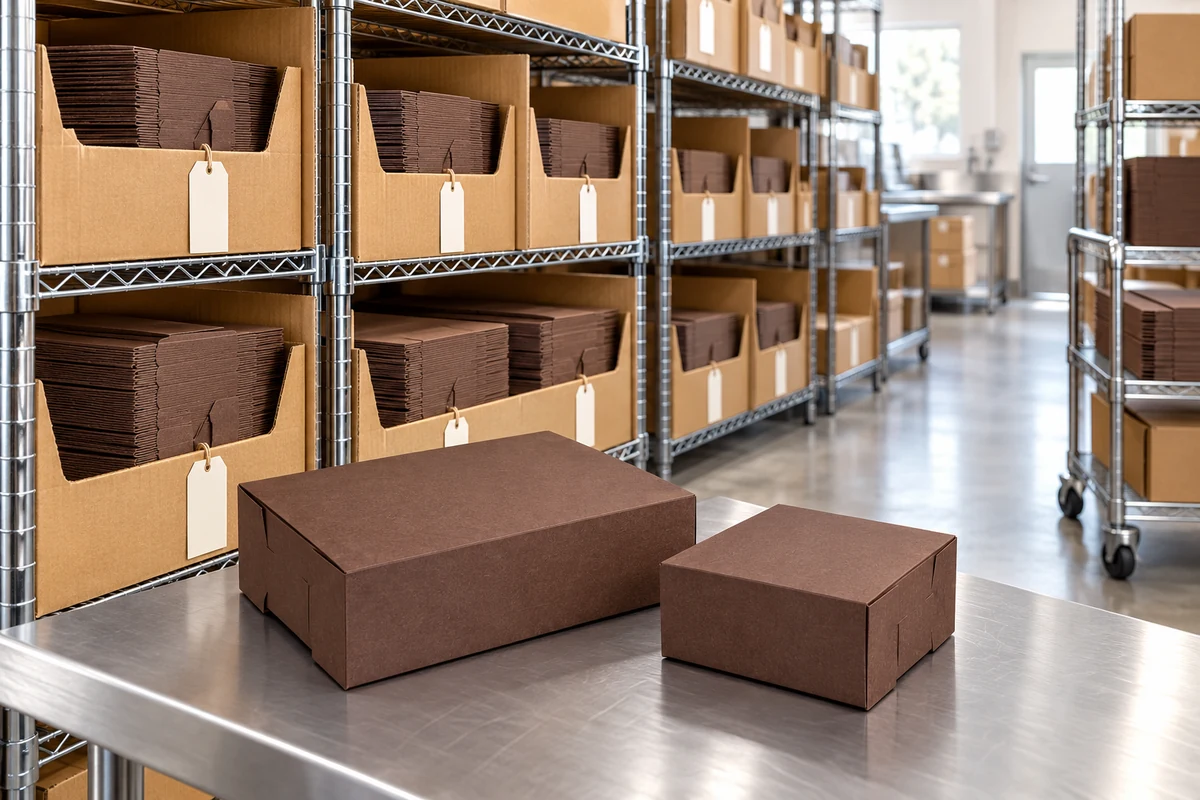
Flat packaging saves space only when staff can find the right item and keep it in usable condition. A simple storage routine helps protect your boxes and reduces last-minute searching during service.
Give every size a clear home
Label each storage position with the item name, dimensions, case quantity, and internal stock code if you use one. Keep similar-looking sizes separate so staff do not discover a mismatch after filling a box.
Mark which package belongs with each menu item or order bundle. A photo of the assembled box can help new team members choose correctly.
Protect unused stock
- Keep packaging in a clean, dry area away from spills and sources of moisture.
- Use appropriate shelving and protect stock from crushing or rough handling.
- Keep unused items in their protective outer packaging until needed.
- Separate damaged, wet, or contaminated items from usable inventory.
Follow the supplier’s product-specific storage guidance and your operation’s food hygiene procedures. Do not use packaging that has been compromised simply because it still folds into shape.
Rotate and count consistently
Label incoming cases with the receipt date and use older suitable stock first. Keep seasonal or outdated printed packaging clearly identified so it does not accidentally enter everyday service.
Count in pieces or cases consistently and record the conversion. Set a regular check for your fastest-moving sizes, including any inserts or boards needed to complete them.
Review W Packaging’s product range when assessing your stock list. For the details needed to price a replacement order, use our quote checklist.
Plan a more manageable packaging order
Ask W Packaging about your packaging requirements. Share your most-used sizes, estimated usage, available storage, and target order quantity.